During our recent Building AI-Enabled Sales Operations training session, I went off on a bit of a rant about how there’s still too many executive teams insisting that every function in their company needs to develop an “AI strategy.”
You probably recognize the drill…
AI is the future! Everyone’s talking about it! It’s going to change everything! We need to get ahead of it! Every department needs to figure out how to leverage AI to the fullest! So…by the end of the quarter, we want every team to submit their AI strategy for review!
Gee, that all sounds forward-thinking and strategic, doesn’t it?
Well…I think it’s pretty silly. And shortsighted. And even counterproductive.
Think about it this way…
Imagine your CEO announcing that every department needs to develop a Microsoft Office strategy by the end of the quarter. Everyone needs to identify at least ten use cases for Microsoft Office and submit a roadmap for implementing them in a timely manner. And don’t forget those KPIs for measuring everyone’s progress!
It sounds ridiculous, doesn’t it? But that’s essentially what many companies are doing with AI.
Rather than starting with what the business needs to accomplish and figuring out how the technology might help, they’re starting with a technology and then looking for things to do with it.
Now, don’t get me wrong…AI is a very powerful set of technologies with tremendous potential to transform sales operations. In fact, that’s what our entire training session was about.
But AI is a means to an end. It’s not the end itself!
Our forward-looking plans should be centered on our strategic sales priorities and capability gaps. What are our biggest untapped opportunities for improving sales performance? Which meaningful sales enablement capabilities are we missing? What’s preventing us from doing the things we’ve long known we should be doing
Maybe our sales forecasting processes are still heavily dependent on subjective assessments from salespeople and their managers. As a result, maybe our forecasts are less reliable than they should be, and we’re spending an enormous amount of time chasing down updates, reconciling conflicting inputs, and explaining why the numbers keep changing…and the misses keep happening.
Or maybe we’re sitting on a mountain of customer and transactional data, but we still can’t reliably identify which accounts have significant untapped growth potential, which are showing early signs of defection, or which prospects are most likely to become profitable, long-term customers.
These are the types of things our development roadmap should address.
And once we’ve identified our strategic priorities and capability gaps, we can then start thinking about how AI might help us address them more effectively, efficiently, and economically than we could have before.
Maybe AI enables us to develop more sophisticated forecasting models that incorporate actual buying behaviors, pipeline dynamics, and historical conversion patterns. Maybe it can continuously identify anomalies and emerging risks, allowing us to intervene before problems become unpleasant quarter-end surprises.
And maybe AI can analyze customer purchasing patterns to identify specific cross-selling opportunities, detect early warning signs of defection, and deliver timely, actionable recommendations to salespeople through the CRM tools they’re already using.
Great! But notice how we started with the business need and not the technology? That’s how it should be. In fact, if we’ve already done a decent job of identifying our strategic priorities and capability gaps, we’ve got the bulk of our so-called “AI strategy” figured out already.
So, if your executive team is beating the drum and insisting that everyone submit an AI strategy, here’s one you can steal…
We’ll leverage AI to the fullest extent possible to help deliver on our most important strategic priorities and close our most consequential capability gaps, which are…
And then list them. There you go. There’s your “AI strategy” in a nutshell. Feel free to copy and paste it into whatever template corporate has provided.
Of course, we still need to understand what AI can and can’t do, evaluate different approaches, and develop sensible implementation plans. But those are all tactical execution considerations.
Strategy is all about deciding what matters most to the business and what needs to change to produce better results, given the current and predicted situational realities, available resources, and competitive dynamics.
Simply put, strategy is about deciding where we need to go. And while AI can definitely help us get there, we have to remember that it’s not the destination!
Building AI-Enabled Sales Operations

How can Sales Ops teams move beyond the easy and expedient and apply AI to the most consequential activities, decisions, and workflows for improving ongoing sales performance and results?
Developing a Winning Sales Ops Roadmap
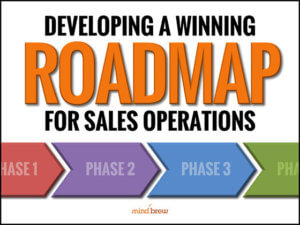
For transforming Sales Ops, good intentions aren't enough. You need a plan. In this on-demand webinar, learn about creating an effective roadmap for making Sales Ops a more strategic function.
Aligning Sales Ops to Business Strategy
How do you ensure that your sales operation and the overall business strategy are properly aligned? And what do you do when there's a disconnect?